The rise of ‘quiet luxury’ in UK homes represents a shift in how we understand value.
It’s not about making your home look expensive, although this is a common misconception. Quiet luxury doesn’t want you to choose obvious status symbols or follow attention-grabbing micro-trends.
It’s more about rejecting the ‘fast furniture’ cycle in favour of quality materials, superior craftsmanship and the smaller details you notice when you actually live in a space.
After all, why purchase in a poorly-made, flat-pack furniture when you could invest in something that will become a part of your home for years to come? Pre-loved, quiet luxury asks homeowners to make smarter decisions about what they buy and who they buy from.
What exactly is ‘quiet luxury’ interior design?
Luxury is subjective, but perceptions often overlap in interior design. A central theme is ‘timelessness’: a colour scheme, type of furniture, kitchen style, or material that looks just as elegant in a decade as it does today.
Natural wood, tactile fabrics, stone, and warm metals feature so heavily in luxury interiors because they retain their value over time, and won’t suddenly look like last year’s trends.
Textures like timber and brass have their own variations in grain and tone, meaning they don’t rely on a ‘fashionable’ pattern to create interest. But you shouldn’t confuse quiet luxury with minimalism.
Minimalism often means stripping a room back to its essentials and keeping decoration to a minimum, and while quiet luxury can definitely feel restrained, it doesn’t mean a room has to be sparse.
Why are UK homes getting quieter?
Quiet luxury may seem to have sprung up out of nowhere, but its sudden resonance reflects a bigger change in how we think about our homes.
After years of overly curated social media feeds, homeowners are searching for design elements that aren’t being pushed purely to appease an algorithm. We want spaces that feel personal and curated specifically for the people living in them.
What does quiet luxury actually look like in an everyday home?
So, what does this look like in practice? We’ve touched on a couple of elements (e.g., timber, brass, materials with grain and texture), but it isn’t really a checklist of items you need to buy.
It’s more about how a room comes together, and by this, we mean something as simple as paying attention to the details you’ll use every day.
1. Materials that get better as they age
With fast furniture, products look their best on the day they’re installed, and then slowly deteriorate.
Quiet luxury is the opposite principle. A vinyl-wrapped kitchen door will eventually peel, but a solid oak frame can be sanded and repainted after a decade of heavy use, looking even better than it did originally.
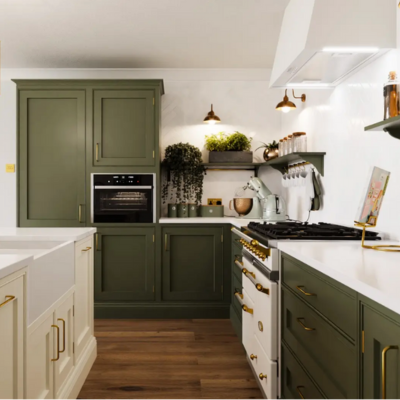
Polished chrome taps may look beautiful, but they show every water mark and will require consistent upkeep. Instead, consider ‘living’ finishes, like unlacquered brass or brushed nickel, that patinate over time.
These materials absorb the history of your house, and look all the better for it.
2. Moving past beige
A home doesn't have to be devoid of colour to be visually quiet - it’s another common misconception in interior design, one that might see a homeowner paint their entire kitchen oatmeal, only to long for colour later.
Trends for 2026 point to shades such as soft olive, earthy pink, chocolate and caramel tones, muted mauve, and other nature-inspired colours as alternatives to highly saturated shades.
3. Texture over visual noise
If colour is restrained, something else needs to give a room depth (this is where texture becomes especially important). A timber cabinet, for example, already contains changes in grain.
Linen catches light differently from velvet, and brushed metal looks softer than something polished. Put some of these together, and a room can have plenty of visual interest without excessive patterns.
But what’s essential is restraint - you don’t want to put every interesting material you can find into one room. Two or three contrasting textures will often do more than having several competing for attention.
4. Details you notice by using them
Some of the most convincing signs of quality aren't photogenic at all. They’re the things you only notice after using the room for a longer period of time.
It might be the glide of a solid wood drawer on premium runners and the traditional dovetail joints when you look inside. The hallmarks of true craftsmanship are hidden in the details - the ‘quiet’ elements that make a kitchen truly luxurious.
Get quiet luxury for less with the UK’s number one Kitchen, Bedroom, Bathroom outlet!
To see real examples of quiet luxury, browse our constantly changing collection of approved used kitchens from across the UK. We offer complete kitchen listings from some of the best-known names in British and European kitchen design.
Shop for pre-loved Shaker kitchens from names like Charles Yorke, John Ladbury, Neptune and John Lewis, all for hundreds, potentially thousands less than high-street prices. Or, if you’re interested in handleless kitchens, we also have deals on SieMatic and Crown Imperial.